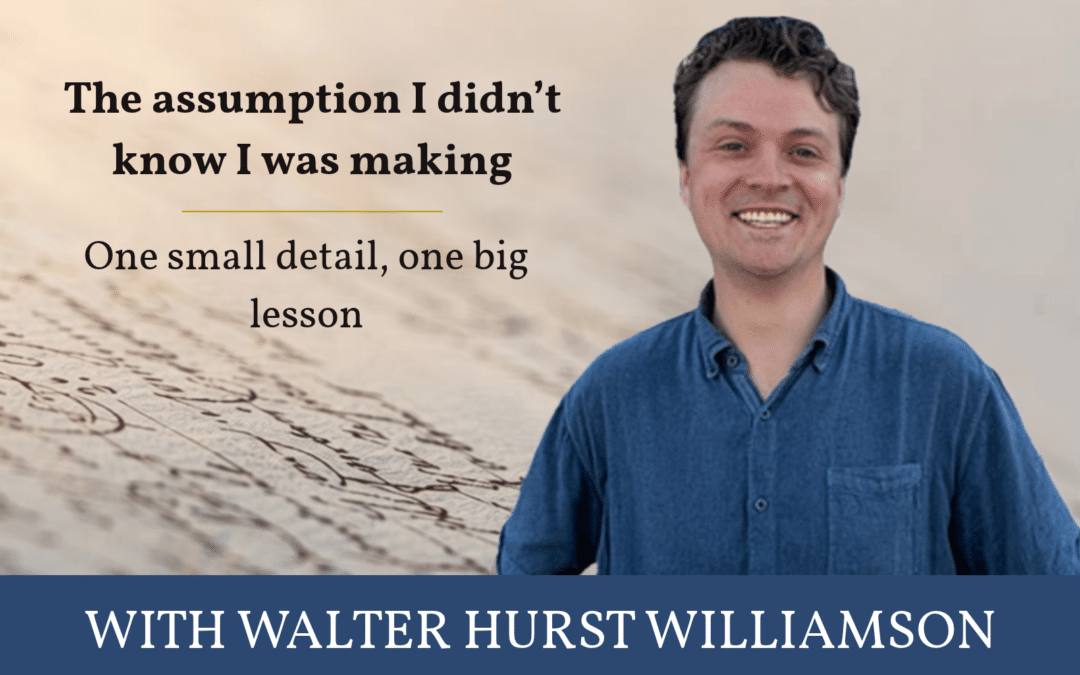
Author Walter Hurst Williamson thought including a scene of a rugged historical leader drinking a beer with his men would help set the scene. He received a three-page explanation of why he was wrong.
In this week’s author interview, Williamson reflects on the pitfalls of writing lesser-known historical figures, and what he’s learned about telling these stories with greater cultural and historical accuracy.
Want to be interviewed for our blog? Join our author interview network.
The Sands Shall Witness was a passion project of mine that I must’ve started and stopped a dozen times in the eight years it took to finish. While it’s not my first novel, it’s the first I’ve taken this far, and I still have to pinch myself when I remember that it’s a full-fledged book on bookshelves from Steamboat, Colorado to Pretoria, South Africa. This achievement is all the more satisfying given the unique challenges I faced bringing this novel to life.
The challenge of sharing untold stories
Part of the reason why Sands was so challenging is that the historical figures in the book aren’t as commercially popularized. If you take someone like Winston Churchill, he’s so much a part of the shared lexicon that no matter what personal license an author takes with Churchill, we are all “playing with the same deck,” so to speak. We can all visualize his face and hear his famous gravely voice. And from his place in history, it’s easy to imagine the kinds of things he would say.
On the other hand, almost all of the characters in Sands are unknown to readers outside of Namibia. And while that’s liberating as a writer in some respects, it also meant that I needed to rely on ironclad research. As writers of historical fiction, I believe that we have a duty to readers not to misshape their perspectives of those who came before us.
Getting the details right
In the case of Churchill, if I wrote “the prime minister scratched his long, black beard and spoke in a high, squeaky voice,” you would know I was grossly misinformed. Churchill is famously clean-shaven, and we have recordings of his voice. It’s not squeaky at all!
But if I wrote that Samuel Maharero (one of the main historical figures in Sands and a national hero of Namibia) was “short, rotund, and with a face horribly scarred from a childhood accident,” would you know I was misinformed? If you were reading Sands in a beer garden in Windhoek, you might, but probably not if you were in a café in Boston.
And this danger is one that was constantly on my mind as I wrote this novel. Because whenever someone opens a history novel on a topic they don’t know much about, you’re consciously or unconsciously forming their perception of history itself. (Maharero was tall and thin, FYI).
So, when you want to write about lesser-known historical figures, how do you go about it?
Well, the honest answer is that you can’t easily do so. Not without help. And for me, that help came in the form of the Otuvawa Cultural Institute.
Already have an account? Log in here.
Walter Williamson graduated cum laude from Rice University in 2015, with a dual degree in African History and International Relations. The Sands Shall Witness is his debut novel, born of his travel experiences and thesis research on sub-Saharan Africa. When he is not writing, Walter works as an Executive Coach and Storytelling Consultant. He has published two business books: Disrupted! How to Reset Your Brand & Your Career, and Authentic Presence. Walter and his wife Emma live in Atlanta, GA with their two wonderful hunting dogs, Shae and Houston.